Pug: A Charming Botanical Dog for Thoughtful Embroidery
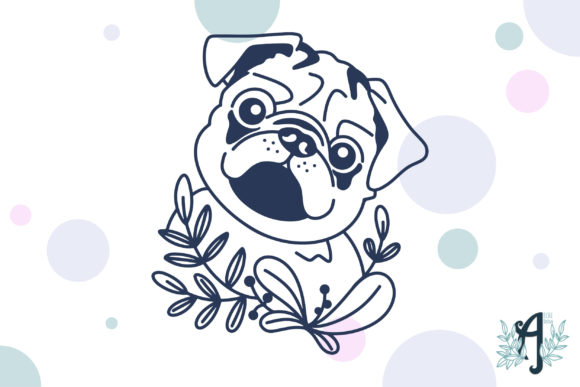
As a designer who’s stitched hundreds of custom pieces—from boutique baby onesies to Etsy best-selling tote bags—I opened the Pug embroidery file with quiet curiosity. Not hype, not hope—just assessment. What I found wasn’t just “cute.” It was a well-balanced, intentional machine embroidery design: a friendly pug nestled inside a soft botanical wreath, clean in silhouette, gentle in rhythm, and quietly versatile.
First Impressions: Warmth, Clarity, and Craft-Ready Composition
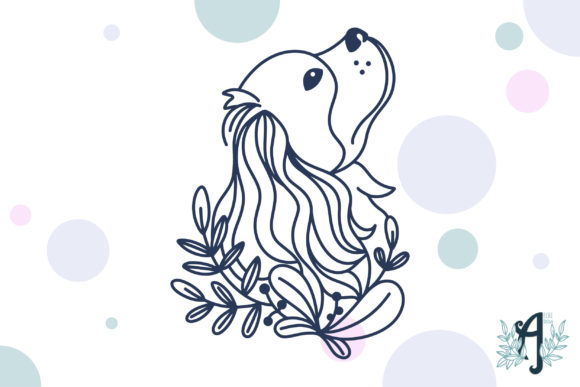
The Pug design lands with immediate warmth. Its round face and relaxed expression read as approachable—not cartoonish, not overly stylized. The botanical wreath wraps it like a subtle frame, not a cluttered border. Leaves are simplified but distinct; no tiny veins or fussy curls that would vanish under satin stitch. That matters. In real-world embroidery, clarity wins over complexity every time.
I immediately pictured it on a natural linen tea towel—centered, modest in scale—and then on a charcoal sweatshirt cuff, where its organic shape would soften the garment’s structure. This isn’t a design shouting for attention. It whispers quality. That makes it ideal for small shop products, personalized gifts, and handmade items where subtlety builds trust.
Where Pug Shines (and Where It Asks for Care)
Pug works beautifully on stable, medium-weight fabrics: cotton twill for aprons, midweight fleece for baby blankets, structured canvas for embroidered patches. On a custom tote bag I recently stitched for a local florist, Pug held its shape perfectly at 3.5" wide—no distortion, no thread nesting, even across the slight curve of the gusset seam.
It also translated well onto a lightweight organic cotton onesie using a tear-away + cut-away stabilizer combo. The wreath’s open spaces allowed breathability, while the pug’s solid features anchored the stitch density just right—no puckering, no stiffness.
But here’s where attention is needed:
- Small hoop sizes: At full scale, the wreath extends beyond 4", so if you’re limited to a 4×4 hoop, confirm whether the file includes a scaled-down version—or plan to reposition carefully.
- Textured or stretchy fabric: On slubbed linen or ribbed knit, test first. The wreath’s gentle curves can blur slightly if stabilizer isn’t matched precisely to fabric movement.
- Dark fabric: The PNGs include a transparent background, which is great—but remember: thread color contrast becomes critical. A light tan pug on navy needs warm-beige thread, not stark white, to keep that botanical softness intact.
- Curved surfaces (like caps): The design’s symmetry helps, but avoid placing it too close to the crown seam. The wreath’s outer leaves may shift subtly unless hooped with extra care and minimal fabric tension.
Design Integrity in Real Projects
What sets Pug apart isn’t just charm—it’s coherence. As a digital embroidery file, it carries visual logic from screen to stitch. The balance between the pug’s compact form and the wreath’s airy loops creates rhythm without crowding. That means fewer dropped stitches in fill areas, cleaner satin borders around the dog’s outline, and smoother transitions between running stitch vines and denser leaf fills.
I used it in a holiday embroidery batch—stitched on cream flannel pillow covers for a local gift shop. Customers responded not just to the subject (“Oh, my cousin has a pug!”), but to how *finished* it looked: crisp edges, even thread lay, no visible underlay bleed. That polish elevates perceived value—especially for Etsy sellers pricing handmade product above commodity tiers.
For craft business owners building brand consistency, Pug fits neatly into a nature-meets-pet aesthetic. Pair it with simple monograms or minimalist botanical motifs, and it reads as part of a considered collection—not a one-off clipart addition.
Practical Designer Notes Before You Stitch
Before committing to your first run—whether for client work, a craft fair batch, or your own Etsy listing—here’s what I always do with a new embroidery file like Pug:
- Test on scrap fabric *identical* to your final material—including wash-and-dry if the item will be laundered.
- Check stitch density visually in your embroidery software. Look for tight clusters in the wreath’s inner curves—those can cause heat buildup or skipped stitches on slower machines.
- Review all included formats: SVG and DXF help with resizing or digitizing adjustments; EPS supports vector editing; PNGs are perfect for printable mockups or digital product previews.
- Confirm licensing terms directly with the seller. Since this is a Graphics listing in Crafts, verify whether commercial use of the *finished embroidered product* is permitted—and whether reselling the digital embroidery file itself is allowed.
- Run black-and-white mockups. Does the pug’s face still read clearly? Does the wreath retain shape? If yes, you’ve got strong design bones.
- Try it on both light and dark backgrounds in your design preview. Some wreath details lift better in shadow; others need brightness to land.
A Design That Serves the Maker—and the Market
Pug doesn’t try to be everything. It’s not a bold logo, a dense monogram, or a hyper-detailed portrait. It’s a focused, emotionally resonant embroidery file built for real use: thoughtful personalization, small-batch merchandise, and gifts that feel handmade—not mass-produced.
That focus is its strength. For an Etsy seller launching a line of pet-themed nursery decor, Pug adds instant cohesion. For a café embroidering staff aprons, it brings lighthearted professionalism. For a hobbyist stitching holiday gifts, it delivers joy without frustration.
In short: Pug earns its place in your embroidery project queue—not because it’s trendy, but because it’s reliable, expressive, and quietly sophisticated. It reminds us that the best craft business assets aren’t just technically sound—they feel human, intentional, and ready for the real world.