Doggy Love: A Designer’s Real-World Embroidery Review
First Impressions: Sweet, Simple, and Surprisingly Versatile
When I opened Doggy Love, I wasn’t expecting a showstopper—but I *was* hoping for something that felt handmade without looking amateurish. What I found was a collection of clean, expressive dog illustrations with gentle curves, friendly silhouettes, and just enough detail to read clearly at 3–4 inches tall. The mood is warm and inclusive—not cutesy to the point of saccharine, not minimalist to the point of vague. It lands right where small-batch makers want to be: approachable, thoughtful, and quietly confident.
A Real Project Test: Embroidering a Linen Tote for a Local Pet Boutique
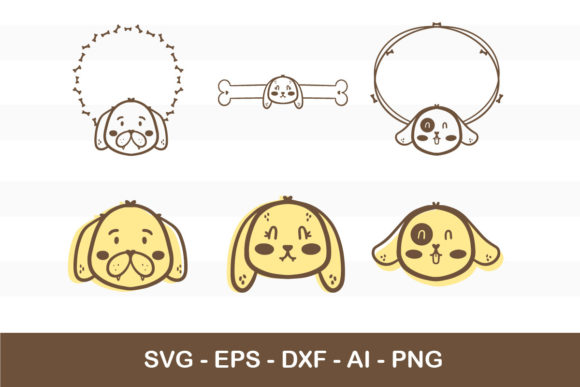
Last week, I used Doggy Love on a natural linen tote bag—intended as a limited-run gift for customers who adopted from a local shelter. I chose one of the framed designs (the heart-shaped frame with a sitting terrier) and stitched it on the front pocket. The result? Crisp edges, balanced negative space, and zero puckering—even on the slightly uneven weave of the linen. That told me two things immediately: the vector files are well-constructed, and the design respects fabric behavior. It didn’t fight the grain or demand excessive stabilizer. For a craft business owner juggling five orders before lunch, that kind of reliability matters more than flashy details.
Where Doggy Love Shines—and Where It Needs Thoughtful Handling
Doggy Love works beautifully across custom apparel and soft goods—but not equally everywhere. Here’s how it performed in real contexts:
- Sweatshirt embroidery: Excellent. The moderate stitch density held up on medium-weight fleece without shadowing or stiffness. No need for heavy cutaway—medium tear-away + light iron-on did the job.
- Baby onesies and burp cloths: Ideal for gentle, low-profile stitching. I used a running stitch outline + minimal fill on the ears and nose—soft enough for delicate skin, still legible after three washes.
- Embroidered patches: The included frames make perfect patch borders. Clean lines, no jagged corners, and the SVG/EPS files scaled down to 1.5” without losing integrity.
- Tote bags & tea towels: Strong visual impact even at larger sizes. The design doesn’t get “busy” when enlarged—unlike some overly detailed graphics that turn muddy in fill stitch.
- Caps and curved surfaces: Use caution. The rounded frames and subtle contours translate well *if* you adjust underlay and reduce density slightly—especially near the bill curve. Not impossible, but worth a test run first.
- Dark or textured fabrics: Works, but check contrast. On charcoal terry cloth, I switched to ecru thread instead of white—softer, more cohesive. Always test thread colors against your base fabric before committing.
What Makes This More Than Just Another Digital Embroidery File
As someone who reviews dozens of embroidery files a month, I notice what separates usable design assets from digital clutter. Doggy Love stands out because it understands context. It’s not trying to be everything—it’s designed for warmth, recognition, and quiet storytelling. When stitched on a baby blanket, it feels like a quiet promise. On an apron for a dog-friendly bakery? It signals shared values, not just decoration. That kind of resonance builds customer trust faster than any sales copy.
It also supports brand consistency. Whether you’re an Etsy seller building a pet-themed shop or a boutique embroiderer curating a seasonal collection, Doggy Love fits cleanly into a visual language—not as a standalone gimmick, but as part of a considered aesthetic. And yes, it photographs well. No awkward scaling, no fuzzy PNGs in your printable mockups. The included PNG renders cleanly for listings, social posts, and email banners.
Practical Notes Every Embroidery Designer Should Check Before Stitching
This isn’t just about opening a file and hitting “embroider.” Here’s what I did—and what I’d advise you do too:
- Test on scrap fabric first—especially if using stretchy knits or lightweight cotton. Even simple designs behave differently depending on tension and feed.
- Review stitch density in your embroidery software. If it looks dense in the paws or inner ears, consider reducing fill % by 5–10% for breathability and drape.
- Confirm hoop size compatibility. Some frames extend beyond standard 4×4 hoops—check the preview image dimensions before hooping.
- Inspect small details like collar tags or paw pads. They’re charming, but may need slight simplification for very small-scale projects (e.g., 1.25” embroidered patches).
- Try black-and-white mockups. Does the design hold up in monochrome? With Doggy Love, it does—making it flexible for branding, logos, or minimalist product lines.
- Use proper stabilizer—not just for stability, but for surface texture. A light film-type stabilizer kept the linen tote smooth; a cutaway worked better for structured sweatshirts.
- Verify licensing before selling finished items or reselling the digital embroidery file. Since Doggy Love is listed under Graphics and Crafts, confirm whether commercial use is permitted for both physical products and digital redistribution.
Final Thought: Not Just a Design—A Quiet Connector
Doggy Love won’t dominate a trade show booth. It won’t go viral for its technical complexity. But it *will* make someone pause while scrolling, smile while unwrapping a gift, or choose your shop over another because it feels human—not algorithmic. In a market saturated with overdesigned, overprocessed graphics, its sincerity is its strength. It’s the kind of machine embroidery design that makes handmade products feel intentional, personal, and quietly joyful. And for craft businesses, Etsy sellers, and small shop owners building real relationships—one embroidered tote, pillow cover, or baby onesie at a time—that’s exactly the kind of value that lasts.